How to read the Bible in order (and which order is right for you)
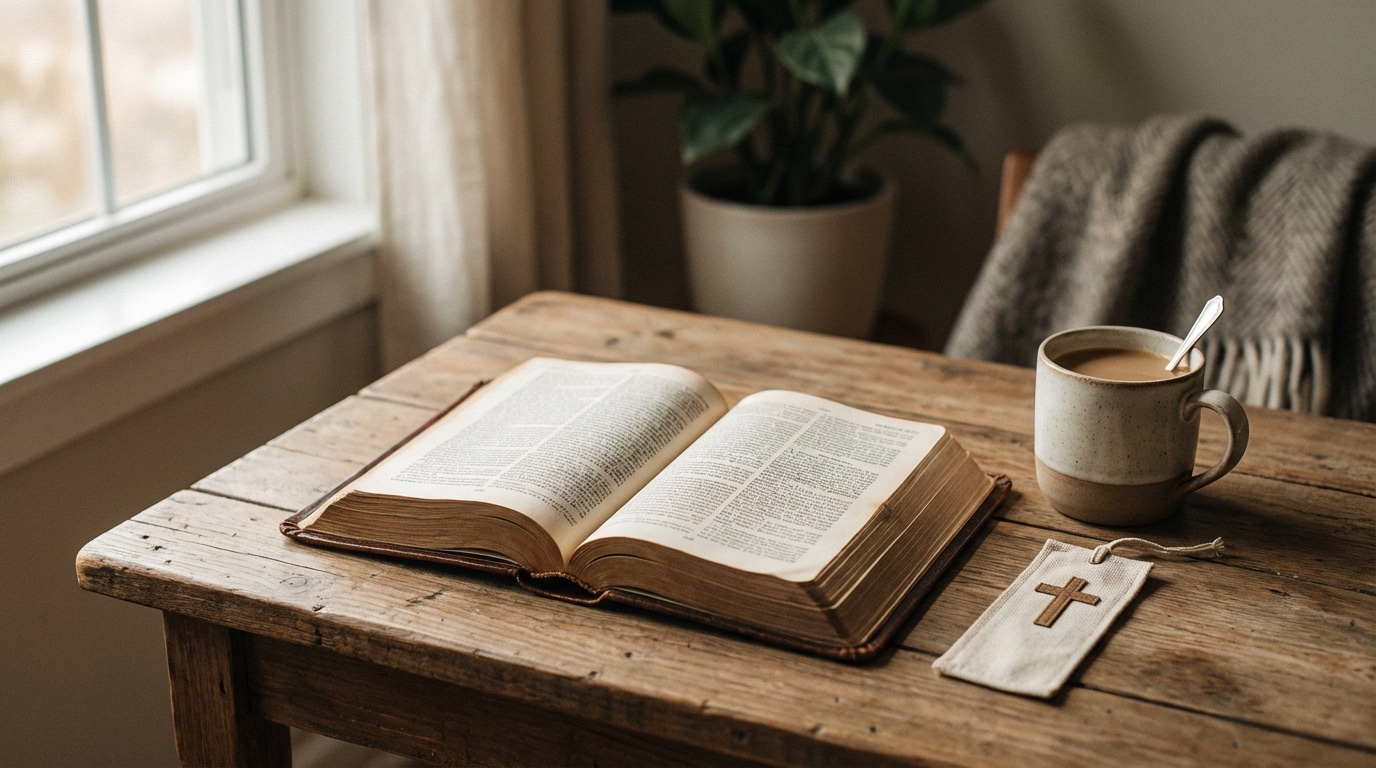
The Bible has 66 books, 1,189 chapters, and zero instructions on which order to read them in. If you’ve ever opened Genesis, gotten bogged down somewhere in Leviticus, and quietly closed the book, you’re not alone. Most people who try to read the Bible from front to back don’t finish.
Here’s the thing most reading guides won’t say upfront: the Bible isn’t arranged in the order events happened. It’s organized by genre. The histories sit together, the poetry sits together, the prophets sit together. That structure made sense for ancient communities who already knew the stories, but it can be confusing for someone reading for the first time.
So which order should you read the Bible in? It depends on why you’re reading it. This guide walks through the four main approaches, compares them side by side, and helps you pick the one that matches how you actually want to engage with Scripture.
Table of contents
- Why the Bible isn’t in chronological order
- The four main reading orders
- Canonical order: front to back
- Chronological order: by historical timeline
- Thematic order: by topic or theme
- New Testament first
- Comparison table: which reading order fits you
- How to pick the right order for you
- Tips for sticking with any reading order
- FAQ
Why the Bible isn’t in chronological order
The English Bible is arranged into sections by literary type, not by when events occurred. The Old Testament groups books into four categories: the Pentateuch (Genesis through Deuteronomy), Historical Books (Joshua through Esther), Poetry and Wisdom (Job through Song of Solomon), and the Prophets (Isaiah through Malachi). The New Testament follows a similar pattern with the Gospels, Acts, the Epistles, and Revelation.
This arrangement goes back centuries. The Hebrew Bible used a different grouping called the Tanakh (Torah, Prophets, Writings), and when the Bible was translated into Greek and later Latin, the books were reorganized into the genre-based structure we use today. According to Got Questions, this organization helps readers find related content together but can make the historical narrative harder to follow.
The result is that books written during the same period end up in different sections. The prophet Isaiah was active during events described in 2 Kings and 2 Chronicles, but you’d never know it from the table of contents. Job is possibly the oldest book in the Bible, but it sits between Esther and Psalms.
Once you see why the Bible is structured this way, the question shifts from “should I read it in order?” to “which order?”
The four main reading orders
There’s no single correct order to read the Bible. Different orders serve different purposes, and what works well for one reader might frustrate another. Here are the four most common approaches.
Canonical order: front to back
This is the most straightforward approach. Start at Genesis 1:1, read every book in the order they appear, and finish at Revelation 22:21.
What it looks like: Genesis, Exodus, Leviticus, Numbers, Deuteronomy, Joshua, Judges… all the way through to Revelation.
What works about it: You experience the Bible the way it’s been published for centuries. There’s no special plan to follow. You just open the book and read forward. Each genre section builds on the last in a literary sense, even if the timeline jumps around. The Pentateuch lays down the law, the histories show Israel trying (and failing) to follow it, the poetry reflects on it, and the prophets call people back to it.
Where readers get stuck: Leviticus and Numbers. These books contain detailed laws about sacrifices, cleanliness rituals, and census records. They’re important in context, but they’re a common wall for first-time readers. In online forums like Reddit’s r/Bible, the most frequent question from new readers is some version of “I hit Leviticus and stopped. Is that normal?”
It is normal. And if you’re the kind of person who commits to finishing what you start, reading front to back is a perfectly valid choice. Just know that the difficulty isn’t evenly distributed. Genesis and Exodus read like a narrative. Leviticus reads like a legal code.
Best for: Completionists who want the full picture and won’t skip sections. People who’ve already read individual books and now want the cover-to-cover experience.
Chronological order: by historical timeline
A chronological reading plan rearranges the 66 books (and sometimes individual chapters) into the order events actually happened. You still read every word of Scripture, but the sequence follows the historical timeline instead of the genre groupings.
What it looks like: You might start with Genesis, but you’d read Job shortly after (since many scholars place Job in the patriarchal period). When you reach the period of the divided kingdom, you’d alternate between 1 Kings, 2 Chronicles, and the prophets who were active at the same time. During Jesus’ ministry, you’d read parallel Gospel accounts together rather than four separate times.
What works about it: Connections between books suddenly make sense. Reading Isaiah’s warnings alongside the events in 2 Kings shows you what was happening when those prophecies were given. Reading Paul’s letters alongside the events in Acts lets you see what was going on in each church when Paul wrote to them. According to Grace Theological Seminary, this approach helps readers “see the connections between events as they happened in sequence.”
Where readers get stuck: You need a reading plan. You can’t just open the Bible and know what comes next chronologically. Bible Study Tools offers a free daily chronological plan, and Bibles International publishes a downloadable PDF of the chronological book order. But flipping between books constantly can feel disjointed, especially in the Old Testament where you might jump between Kings, Chronicles, and three different prophets in a single week.
Also worth noting: scholars don’t agree on exact dates for every book. Different chronological plans put books in slightly different orders. The broad strokes are the same, but the details vary.
Best for: History-oriented readers who want to understand when things happened and how events connect. Second-time readers who want a fresh perspective on books they’ve already read in canonical order. Anyone who got frustrated by the genre-based arrangement.
Thematic order: by topic or theme
Instead of reading the Bible straight through (by either arrangement), thematic reading focuses on specific topics. You select a theme and read the passages across the Bible that address it.
What it looks like: If your theme is “prayer,” you might read the Lord’s Prayer in Matthew 6, the Psalms of lament, Hannah’s prayer in 1 Samuel, Paul’s instructions on prayer in his letters, and Jesus’ prayers in John 17 and the Garden of Gethsemane. A theme like “covenant” would take you from God’s covenant with Abraham in Genesis through the new covenant language in Hebrews.
What works about it: You get deep on a specific subject instead of wide across the whole Bible. This is especially useful if you’re looking for guidance on something specific, whether that’s forgiveness, anxiety, marriage, leadership, or any topic the Bible addresses repeatedly. It also helps you see how a single idea develops across different authors, time periods, and genres.
Thematic reading works well as a supplement to another reading order. You might be reading through the Bible chronologically but take a week to focus on what Scripture says about rest.
Where readers get stuck: Without a guide, it’s hard to know which passages are relevant to your chosen theme. You might miss important passages or overweight familiar ones. A good study Bible or concordance helps here. You’ll also miss the surrounding context of each passage if you only read the verses about your theme without understanding where they sit in the larger story.
Best for: People dealing with a specific life situation who want biblical perspective. Study groups working through a topic together. Experienced readers who want to go deeper on subjects they care about.
New Testament first
Many pastors and experienced readers recommend starting with the New Testament, particularly one of the four Gospels. The idea is simple: begin with Jesus, then work backward into the Old Testament with that context in mind.
What it looks like: Common starting points include the Gospel of Mark (shortest and fastest-paced), the Gospel of John (the most theological and accessible), or Matthew (the most structured). After finishing the Gospels and Acts, you’d move through the Epistles and Revelation, then start the Old Testament from Genesis.
What works about it: Christianity FAQ notes that many biblical educators recommend this approach because the Gospels give you the central figure of Christian faith before you encounter the historical and legal material of the Old Testament. When you do reach Leviticus, you’ll already understand what the sacrificial system was pointing toward. The genealogies in Numbers make more sense when you know how the story ends.
This order also front-loads the most widely read and quoted books, which gives you shared reference points with other readers early on.
Where readers get stuck: The Epistles (Paul’s letters) can be dense for first-time readers, especially Romans and Hebrews. And starting the Old Testament at Genesis after finishing Revelation can feel like you’re going backward.
Best for: First-time Bible readers. People who are specifically interested in the life and teachings of Jesus. Readers who want to build confidence with shorter, more accessible books before tackling the Old Testament.
Comparison table: which reading order fits you
| Canonical (front to back) | Chronological (by timeline) | Thematic (by topic) | New Testament first | |
|---|---|---|---|---|
| Best for | Completionists, second-time readers | History lovers, context seekers | Topical study, life application | First-time readers, new believers |
| Difficulty | Moderate to hard | Moderate | Easy to moderate | Easy |
| Requires a plan? | No | Yes | Yes | Somewhat |
| Covers the whole Bible? | Yes | Yes | No (selective) | Yes (if you continue to OT) |
| Biggest strength | Comprehensive, no extra tools needed | Events make sense in context | Focused and practical | Starts with the most accessible books |
| Biggest challenge | Leviticus/Numbers wall | Constant book-flipping | Can miss the big picture | OT can feel anticlimactic after NT |
| Time to complete | 8-12 months at a chapter a day | 8-12 months at a chapter a day | Varies by theme | 10-14 months at a chapter a day |
| Recommended starting book | Genesis | Genesis (then Job) | Depends on theme | Mark or John |
How to pick the right order for you
If you’ve never read the Bible before, the simplest advice is this: start with a Gospel. Mark is short (16 chapters) and moves quickly. John goes deeper theologically and is a favorite recommendation from pastors. Either one works. From there, you can decide whether to continue through the New Testament or switch to a chronological or canonical reading.
If you’ve read parts of the Bible but never the whole thing, a chronological plan will give you the freshest perspective. Books you’ve already read will feel different when you encounter them in their historical context. The prophets, in particular, come alive when you read them alongside the events they were responding to.
If you’re already a regular Bible reader, thematic reading is a good way to go deeper. Pick a topic you’re wrestling with and trace it through Scripture. You’ll find connections you’ve never noticed before.
And if you just want to start at the beginning and read straight through? That works too. Millions of people have read the Bible front to back. Leviticus is temporary. Judges is fascinating. The prophets are wild. You’ll make it.
The reading order matters less than the reading itself. What matters most is that you start and keep going.
Tips for sticking with any reading order
Reading the Bible is a long commitment regardless of the order you choose. Here are some practical ways to maintain the habit:
Start with one chapter a day. At that pace, you’ll finish the Bible in about three years. That might sound slow, but consistency beats speed every time. A chapter takes five to ten minutes, and most people can find that window. The Manna app is built around this exact idea: one chapter a day, no complicated plans, no pressure to read more.
Pick a fixed time and stick with it. Morning, lunch, before bed, whatever. The specific time doesn’t matter nearly as much as doing it at the same time each day. Routine turns reading from a decision into a default.
When you miss a day (you will), just read today’s chapter. Don’t try to catch up by doubling or tripling your reading. That’s how plans become obligations and obligations become guilt. Pick up where you left off and keep going.
Tracking your progress helps more than you’d expect. Knowing exactly where you left off removes the friction of “wait, where was I?” A physical bookmark works. A reading plan checklist works. An app like Manna that remembers your place and shows you what’s next works. Anything that eliminates the startup cost of sitting down to read.
You won’t understand everything. Nobody does on their first read-through, and plenty of lifelong readers will tell you the same. Parts of the Bible are genuinely confusing, and that’s fine. A study Bible with footnotes can fill in context, but don’t let confusion stop your momentum. Understanding builds across readings, not within a single one.
FAQ
Should I read the Bible in order from Genesis to Revelation?
You can, and many people do. Reading from Genesis to Revelation gives you the full scope of the Bible in its published arrangement. The main risk is getting stuck in the law-heavy books of Leviticus, Numbers, and Deuteronomy. If you have the discipline to push through those sections, the canonical order gives you a comprehensive experience that doesn’t require any additional tools or plans.
What is the easiest order to read the Bible for the first time?
Starting with the New Testament is generally the easiest approach for first-time readers. Begin with the Gospel of Mark or John, then continue through Acts and the Epistles. The New Testament books are shorter, more narrative-driven (especially the Gospels and Acts), and give you the core of Christian teaching before you encounter the Old Testament’s historical and legal material.
Is it better to read the Bible chronologically or canonically?
Neither is objectively better. They serve different purposes. Canonical reading follows the Bible as published and doesn’t require an external reading plan. Chronological reading helps you understand when events happened relative to each other, which is especially useful for connecting the prophets to the historical events they were responding to. If you’re reading the Bible for the second time, chronological order is a great way to see familiar books in a new light.
How long does it take to read the entire Bible?
At a pace of one chapter per day, you’ll finish the entire Bible in roughly three years and three months (the Bible has 1,189 chapters). Most year-long reading plans assign three to four chapters per day, which takes about 15 to 20 minutes of reading. If you read at an average pace without stopping, the entire Bible takes roughly 55 to 75 hours, according to estimates from the International Christian College and Seminary. That’s about 12 minutes per day over a year if you follow a standard plan.
What book of the Bible should I start with?
The most common recommendations are Mark (short, action-oriented, gets to the point) and John (more reflective, focused on the meaning of Jesus’ life and ministry). If you want to start with the Old Testament, Genesis is the natural choice since it opens with the creation narrative and the stories of Abraham, Isaac, and Jacob. Avoid starting with books like Leviticus, Ecclesiastes, or Revelation, as they require more context to appreciate.
Building a Bible reading habit is easier with the right tool. Manna is a free app for iPhone designed for reading one chapter of the Bible a day. No complex plans, no overwhelming dashboards. Just open the app, read today’s chapter, and close it.