One Chapter a Day Bible Reading Plan (5 Min/Day)
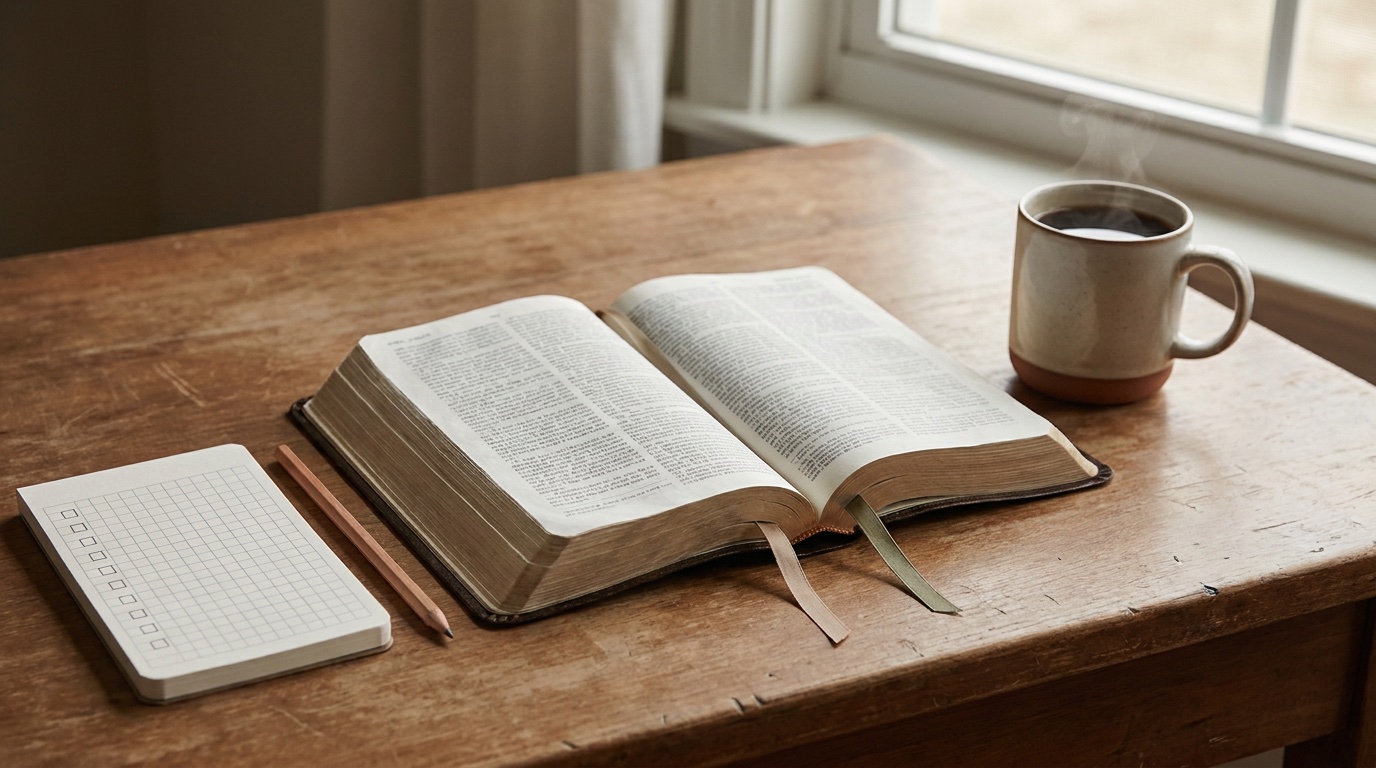
Reading the entire Bible is one of those goals that sounds simple until you actually try it. Most plans ask for three or four chapters a day, which works out to about 30 minutes of reading. That’s fine in January. According to Christianity Today, Bible reading plan participation drops 30 percent in the first week alone. By May, half the people who started have stopped. Most of them feel guilty about it.
A one-chapter-a-day Bible reading plan flips the script. Instead of racing through Scripture at a pace that burns you out, you read a single chapter each day. It takes about five minutes. You finish the whole Bible in roughly three years and three months. And because the daily commitment is so small, you’re far more likely to still be reading six months from now.
Why one chapter a day?
The Bible has 1,189 chapters across 66 books. A 2021 Statista survey found that only 11 percent of Americans read the Bible daily. That number has been trending upward recently, with Barna Group reporting that Bible engagement climbed to 42 percent in 2025 when you include any form of interaction, but daily reading remains uncommon.
The main reason people stop reading isn’t lack of interest. It’s that the daily requirement feels too heavy. Reading three chapters a day means 20 to 30 minutes of focused attention. On a busy Tuesday when you’re tired and distracted, that’s a big ask.
One chapter changes the equation. Five minutes is short enough to fit into almost any schedule. You can read a chapter during your morning coffee, on a lunch break, or before bed. The low barrier means you actually do it, which is the whole point.
There’s a compounding effect too. Someone who reads one chapter every day for a year has read 365 chapters. Someone who attempts three chapters a day but quits after two months has read maybe 180. Consistency beats intensity.
The math behind the plan
Here’s what the numbers look like:
| Plan | Chapters per day | Time per day | Time to finish the whole Bible |
|---|---|---|---|
| One chapter a day | 1 | ~5 minutes | ~3 years, 3 months |
| Two chapters a day | 2 | ~10 minutes | ~1 year, 8 months |
| Three chapters a day | 3 | ~15-20 minutes | ~1 year, 1 month |
| Standard “Bible in a year” | 3-4 | ~20-30 minutes | 1 year |
The Bible contains 1,189 chapters (Crossway). At one chapter per day, that’s 1,189 days, or about 3 years and 3 months. The Old Testament has 929 chapters and the New Testament has 260.
Three years might sound like a long time. But consider: you’ll still be reading your Bible three years from now. People who start aggressive plans often aren’t.
Where to start reading
This is where most guides give you a rigid schedule and wish you luck. But where you start matters less than the fact that you start. That said, some starting points work better than others, especially if you’re new to the Bible.
If you’ve never read the Bible before, start with the Gospel of John. It’s 21 chapters, so about three weeks of reading. John gives you the core narrative of who Jesus is and why he matters. From there, move to Genesis, then work through the rest of the New Testament before tackling the Old.
If you want to go cover to cover, start at Genesis 1 and read straight through. This is the simplest approach. You’ll hit some slow patches in Leviticus and Numbers, but you’ll also get the full narrative arc of Scripture in order.
If you want variety, alternate between Old and New Testament books. Read a book of the Old Testament, then a book of the New Testament, back and forth. This keeps things fresh and gives you different kinds of writing to engage with.
Three approaches to a chapter-a-day plan
1. The straight-through plan
Start at Genesis, end at Revelation. Read one chapter each day in order.
This works well if you like structure and completion. The downside is that some Old Testament sections (genealogies, legal codes, census records) can feel tedious when you’re reading them in isolation. The upside is that you get the full story of the Bible as it was compiled.
2. The alternating plan
Alternate between Old Testament and New Testament books. For example:
- Week 1-4: Genesis (50 chapters)
- Week 5-7: Matthew (28 chapters)
- Week 8-11: Exodus (40 chapters)
- Week 12-13: Mark (16 chapters)
This approach prevents you from spending months in the Old Testament before ever reaching the Gospels. The Navigators Bible Reading Plan uses a similar approach, with 25 readings per month to build in buffer days for catching up.
3. The New Testament first plan
Read the entire New Testament (260 chapters, about 8.5 months), then move to the Old Testament (929 chapters, about 2.5 years).
This is a good choice for new believers or anyone returning to the Bible after a long break. The New Testament is shorter, more narrative, and directly covers the life and teachings of Jesus. Starting here gives you theological grounding before you work through the historical and prophetic books of the Old Testament.
How long does one chapter take?
Most Bible chapters take between 3 and 7 minutes to read. The average is around 5 minutes, though this varies a lot by book.
Short chapters (under 3 minutes):
- Many Psalms (Psalm 117 is only 2 verses)
- Philemon (1 chapter, 25 verses)
- 2 John and 3 John (1 chapter each)
- Obadiah (1 chapter, 21 verses)
Longer chapters (7-10 minutes):
- Psalm 119 (176 verses, the longest chapter in the Bible)
- Numbers 7 (89 verses of offering descriptions)
- Some chapters in Isaiah and Jeremiah
According to Crossway’s reading time data, the entire Bible takes about 72 hours to read aloud at a normal pace. Divide that by 1,189 chapters and you get roughly 3.6 minutes per chapter on average.
The point is that a single chapter is almost always a manageable amount of text. You’re never staring down a 30-minute reading session and trying to find the willpower.
Tips for actually sticking with it
Knowing the plan is easy. Following through is the hard part. Here’s what actually helps:
Attach it to an existing habit. Don’t try to create a new slot in your day. Pair your reading with something you already do. Read one chapter with your morning coffee. Read it on the train. Read it right after brushing your teeth at night. Habit stacking works because you don’t have to remember a new routine.
Read at the same time every day. Flexibility sounds nice, but “I’ll read whenever I have time” usually means you won’t. Pick a time and protect it. Morning tends to work best because you haven’t yet accumulated the day’s distractions.
Use an app that tracks your progress. Seeing a reading streak builds momentum. Manna is designed specifically for this kind of daily Bible reading habit. It gives you one chapter at a time and tracks your consistency, which takes the planning out of the equation and lets you focus on the reading itself.
Don’t try to study every verse. When you’re reading one chapter a day, you’re building a habit, not writing a commentary. Read it through once. If something stands out, sit with it. If nothing stands out, that’s fine too. The goal right now is showing up every day.
Tell someone. Accountability is boring advice, but it works. Mention to a friend, a small group, or a spouse that you’re reading a chapter a day. You don’t need a formal accountability partner. Just knowing someone might ask “how’s the reading going?” adds a small amount of social pressure that helps on low-motivation days.
What to do when you miss a day
You will miss days. Probably several. The question isn’t whether it’ll happen, but how you respond when it does.
The worst response is to try to “catch up” by reading multiple chapters the next day. That turns your sustainable habit into an obligation, and obligations are easy to resent and drop.
Instead, just pick up where you left off. If you miss Monday, read Tuesday’s chapter on Tuesday. Don’t read two. The Bible isn’t going anywhere, and a plan that takes 3 years and 4 months instead of 3 years and 3 months is still a good plan.
The Navigators plan builds in 5 or 6 buffer days per month for exactly this reason. Only 25 readings are scheduled per month, not 30. That kind of margin makes the plan feel forgiving instead of punishing.
If you miss a whole week or more, don’t spiral. Open the Bible, read one chapter, and you’re back. The streak resets, but the habit doesn’t have to.
One chapter a day vs. other Bible reading plans
There are dozens of Bible reading plans out there. Here’s how a chapter-a-day approach compares to the most popular alternatives:
| Plan type | Daily commitment | Completion time | Best for |
|---|---|---|---|
| One chapter a day | ~5 min | ~3 years | Beginners, habit-builders, busy schedules |
| Bible in a year (e.g., Biblica 365-day plan) | ~20-30 min | 1 year | Experienced readers, focused seasons |
| Chronological plan | ~20-30 min | 1 year | People who want historical context |
| Topical/thematic plans | Varies | Varies | Studying specific topics |
| M’Cheyne plan | ~30-40 min | 1 year | Serious students (reads OT once, NT/Psalms twice) |
The one-chapter-a-day plan sacrifices speed for sustainability. If you’ve tried and failed at a Bible-in-a-year plan before, this is probably the better choice. You can always increase to two chapters later once the daily habit is locked in.
Bible.com offers a chapter-a-day plan broken into quarterly segments, which can make the 3-year timeline feel more manageable. Ligonier Ministries also provides a one-chapter-at-a-time plan among their 2026 reading plan options.
Getting started today
You don’t need to wait for January 1st or a new month. The best time to start is today, and the best chapter to start with is whatever comes next.
If you want something that handles the planning for you, Manna is a Bible reading app built around this exact approach: one chapter per day, progress tracking, no complicated study system to configure. It’s worth a look if you’d rather just open an app and start reading.
Here’s your first day: pick a book (John if you’re new, Genesis if you want the beginning), find a quiet five minutes, and read one chapter. Don’t journal about it. Don’t cross-reference it. Just read it.
Then do it again tomorrow. That’s the whole plan.
Frequently asked questions
Can you read the whole Bible one chapter at a time?
Yes. The Bible has 1,189 chapters. Reading one chapter per day, you’ll finish the entire Bible in about 3 years and 3 months. The pace is slower than a traditional Bible-in-a-year plan, but the daily commitment is only about 5 minutes, which makes it much easier to sustain over time.
What is the best book of the Bible to start with?
For first-time readers, the Gospel of John is a strong starting point. It introduces the life and teachings of Jesus in clear, accessible language. After John, Genesis gives you the beginning of the biblical narrative. If you prefer to start at the very beginning and read straight through, Genesis chapter 1 is the traditional starting point.
How many minutes a day do you need to read one chapter of the Bible?
Most chapters take between 3 and 7 minutes to read at a normal pace. The average is about 5 minutes. Some chapters, like Psalm 117 (2 verses), take under a minute. Others, like Psalm 119 (176 verses), take closer to 10 minutes. On any given day, you’re looking at a very small time commitment.
Is reading one chapter of the Bible a day enough?
It depends on your goal. For building a daily reading habit, one chapter is plenty. Consistency matters more than volume. You’ll absorb more from reading one chapter every day for a year than from reading five chapters a day for two months before quitting. If you want deeper study, you can always add journaling, cross-references, or commentary on top of your daily chapter.
What if I don’t understand what I’m reading?
That’s normal, especially in parts of the Old Testament like Leviticus or Ezekiel. Don’t let confusion stop you. Read the chapter through, note what confused you, and move on. Understanding builds over time as you see the same themes, characters, and ideas repeated across different books. A study Bible with footnotes can help, but it’s not required for a first read-through.